
Shrine Guide
Shrine Etiquette & How to Spend Your Visit
Shrine etiquette varies by shrine and region. This guide explains the general flow while also touching on meaning, history, and regional differences so your visit feels more grounded.
The Overall Flow
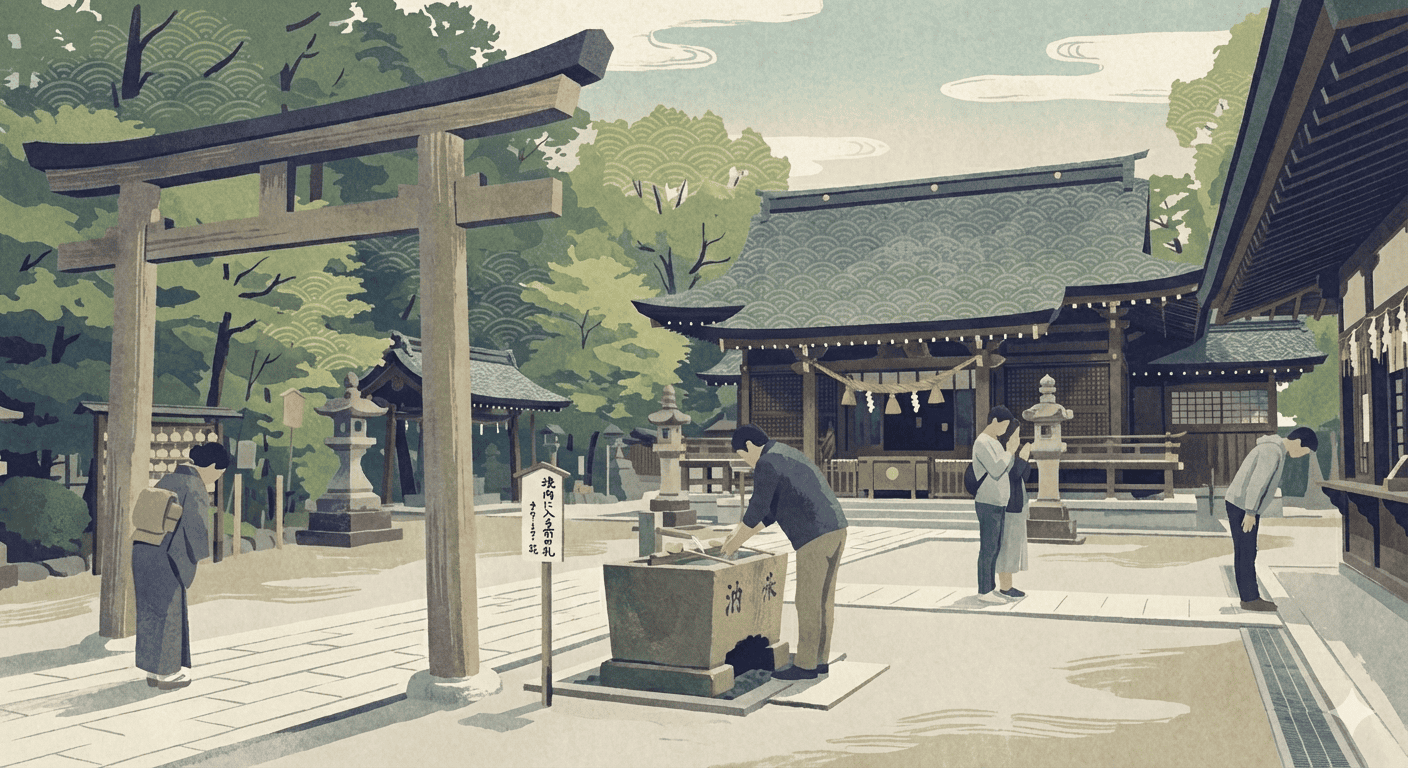
A visit usually starts with a bow before entering, continues with temizu (ritual handwashing), prayer at the haiden, and ends with a bow when leaving. What matters most is not perfect technique but respect for the space and a calm mind.
Shrines are places of purification and gratitude, and also places where communities have welcomed the divine and kept local order. You are still in everyday life, but you carry yourself a little more carefully inside the grounds.
Meaning of Each Action
Bowing and Walking the Approach
The bow at the torii marks the boundary you are about to cross. The center of the approach, the seichu, has traditionally been the ceremonial line used during festivals and processions. Today it is often explained as the path for the deity, so walking the edges shows respect.
Temizu (Purification)
Temizu is not just about cleanliness. It is a small ritual that helps you shift from ordinary life into sacred space.
Bows and Claps
The familiar two bows, two claps, one bow is widely known today. It became common through modern standardization, but the count and order can still differ by shrine, so follow local guidance.
Clapping (kashiwade) is often understood as a way to shift the atmosphere and open a relationship between the deity and the visitor. Its meanings are not singular and vary by time and place.
How the Forms Changed
Shrine practice was never uniform. Through periods of shinbutsu-shugo and later Meiji-era reforms, many forms were standardized, yet older local customs still remain in some places.
Seeing this history helps explain why customs differ. Changes in ritual practice often align with shifts in politics, institutions, and local faith.
Thinking About Shrine Space
Torii, Approach, Haiden, Honden
The torii marks a boundary; the approach is a ceremonial path; the haiden is where people pray. The honden is less a constant residence and more a space prepared to welcome and settle the deity during rites. Understanding these roles makes the flow feel natural.
Smaller Shrines Within the Grounds
Many shrine grounds include multiple smaller shrines. Visiting them can reveal layers of local belief beyond the main deity.
Regional Customs
Izumo
Izumo Taisha is known for four claps, creating a different rhythm from the usual two.Respecting the local style matters more than repeating a universal form.
Ise
Ise Jingu has long stood at the center of state ritual and carries a distinctive sense of formality.The long approach and restricted zones are part of the ritual experience.
Inari
Inari worship spread nationwide and reflects strong local variation. The red torii tunnels and offerings create a visit shaped by local culture.
Shaping Your Prayer
Adding gratitude or a personal vow alongside your wish often feels more sincere. If words are hard to find, quiet reflection is enough.
You do not need to speak aloud. Prayer can be both an inner reset and a moment to reconnect the self with the community and the divine. If you would like to read a norito aloud, see the reading guide on the Norito site.
まとめ
Key PointsEtiquette is not about perfect form. It is about respect, understanding, and the rhythm of the place.
- Think in terms of boundary, purification, and gratitude
- Knowing meaning makes form feel alive
- Regional customs express local memory
- Shape your own words of prayer over time